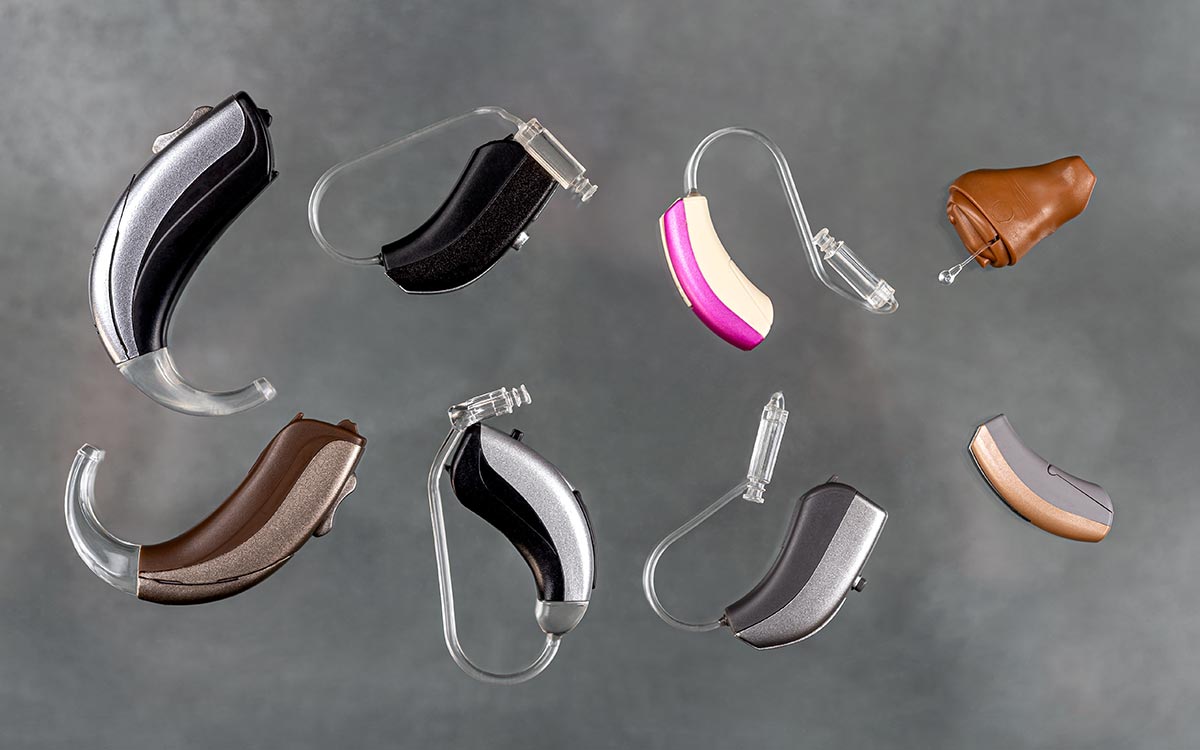
The total volume of hearing aid designs and technology levels on the market today can make the selection process feel complicated. Rest assured that there is an assistive device tailored to every lifestyle and degree of impairment. It’s just a matter of locating it!
By learning about the differences between various hearing aid models, you can move forward with greater confidence and knowledge in managing hearing loss or tinnitus. Today, we’re summarizing the various hearing aid styles and what makes each one unique.
In-the-Canal (ITC) Hearing Aids
The Layout:
ITC models are custom-fitted to sit within the ear canal, though a small part of the shell remains visible in the ear’s outer portion.
Why users choose them:
- Highly subtle than larger models
- Custom-molded for ease
- Works effectively for people experiencing mild hearing challenges
Because they provide both discretion and helpful features, ITC models are a top pick for those new to hearing technology.
Invisible-in-Canal (IIC) Hearing Aids
Core Characteristics:
IIC models are the most miniature custom-fitted hearing solutions you can choose. This style rests deep in the ear for a completely covert appearance.
Primary Motivations:
- Offers the most understated design of any hearing aid style
- Provides authentic sound because of where the device sits
- Lightweight and comfortable
IIC devices are primarily aimed at patients with moderate hearing needs who want their technology to remain completely unnoticed.
In-the-Ear (ITE) Hearing Aids
Product Information:
These models occupy either the complete or bottom half of the outer ear bowl. Every device is specifically customized to match your ear’s unique shape.
Why people choose them:
- The increased surface area provides space for extra functionality and extended power
- Provides a more manageable process for those who struggle with tiny accessories
- Capable of providing enough power for severe hearing needs while remaining in-the-ear
ITE models are frequently selected by people who want a simple, all-in-one design without behind-the-ear components.
Behind-the-Ear (BTE) Hearing Aids
Operation:
BTE hearing aids rest securely behind the ear. Audio is delivered through a thin tube or a personalized mold in the canal.
Reasons for Choosing:
- Highly flexible and durable
- Function for almost all degrees of hearing loss
- The spacious housing allows for high-tech extras and built-in power cells
BTE devices are an excellent option for individuals seeking reliability, ease of use, and strong amplification.
The RIC Style Analysis
Mechanical Setup:
In a modern model, the speaker is detached from the main housing and placed inside the canal via an ultra-fine wire.
Why users choose them:
- Minimizes the “plugged up” feeling for more pure hearing
- Small, lightweight, and comfortable
- Flexible enough to treat an extensive range of hearing impairments
RIC devices are one of today’s most popular models, thanks to their blend of comfort, aesthetics, and performance.
Understanding Long-Term Systems
What they are:
Extended-wear models are fixed devices that a professional fits into the ear for an interval of several weeks.
Lifestyle Advantages:
- Perfect for users who want to bypass the routine of handling hearing aids daily
- Nearly hidden
- Engineered to be worn during everyday activities, including sleeping and exercising
These models are the best choice for a low-maintenance, seamless hearing experience.
Bluetooth-Enabled Hearing Aids
What they represent:
Connectivity-focused hearing aids that utilize radio to integrate with your digital life.
Digital Benefits:
- Stream calls, music, and audio straight to the hearing aids
- Gives you the ability to adjust your volume and programs via an electronic app
- Improved ease for modern lifestyles
This wireless technology is located in many modern behind-the-ear and in-the-canal models.
Surgically Implanted Middle-Ear Solutions
Procedure Info:
Middle-ear implants are specialized tools that use mechanical vibration to enhance hearing via the middle ear.
Medical Motivations:
- Provides a solution for individuals with anatomy that prevents the use of conventional aids
- Comfortable option for chronic ear issues related to traditional devices
These devices require an exhaustive medical review by an ear, nose, and throat expert.
Selecting Your Ideal Hearing Solution
Since each hearing aid design has distinct strengths, the best choice is based on your specific hearing needs, your daily activities, and your aesthetic goals. An audiology professional is your best asset for evaluating these options and finding an ideal choice for your daily routine.
If you’re prepared to investigate the possibilities, schedule a hearing evaluation today. It’s a great first move toward better hearing and more confident communication every day.
Sources:
https://www.mayoclinic.org/diseases-conditions/hearing-loss/in-depth/hearing-aids/art-
20044116
https://www.hearinglife.com/hearing-aids/types
https://www.nidcd.nih.gov/health/hearing-aids
