- 818-431-2599
- We’re ready to serve you at our new location – 21201 Victory Blvd. Suite 115 Canoga Park, CA 91303

If any of the following statements apply to you, it’s important to get your hearing checked by one of our staff:
If you are experiencing any of these warning signs, call or text Performance Hearing Center at 818-431-2599 and make an appointment for a hearing test in Canoga Park.
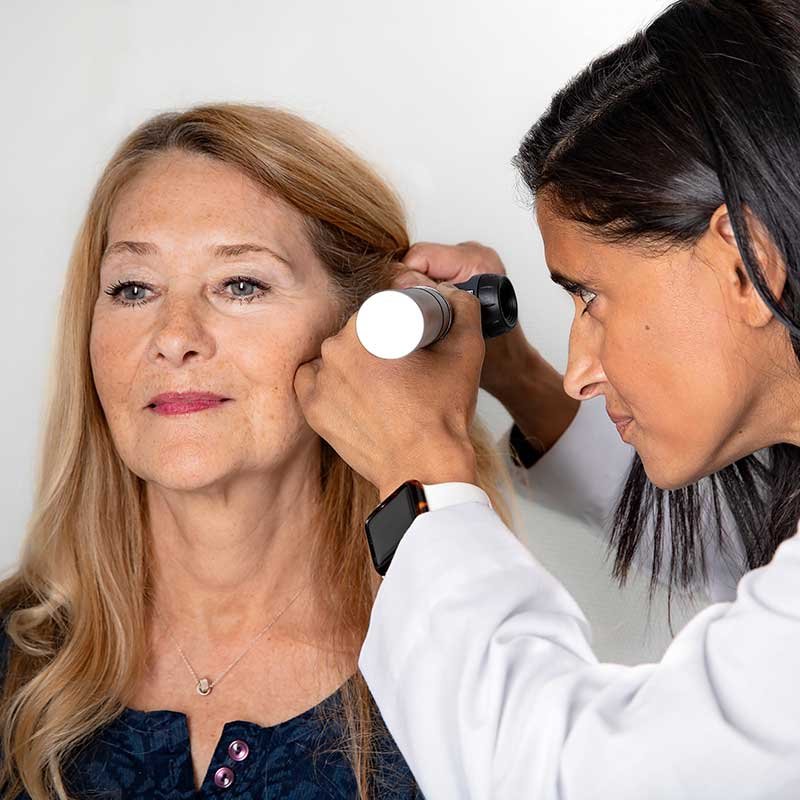
A hearing test can detect issues as simple as an earwax obstruction, or as serious as permanent hearing loss. During your hearing test at Performance Hearing Center in Canoga Park, we will measure the threshold at which you are able to hear specific sounds by having you listen to a series of tones at different volumes. The hearing test will also measure how well you hear and understand speech. This may include testing to determine how well you hear speech when there is considerable background noise.
After the test is completed, your hearing aid professional will create an audiogram that shows your hearing sensitivity. Using frequencies measured in Hertz (Hz), and loudness measured in decibels, the audiogram measures the lowest volume levels at which you can hear certain sounds. The louder it takes for a sound to be heard, the greater the level of hearing loss.
We will review your hearing test results with you and determine your degree of hearing loss. Afterward, you can discuss potential treatment options and which hearing aids will work best for your situation.
Adults with hearing loss in the 26 to 40-decibel range are said to have mild hearing loss. Symptoms include difficulty understanding quiet conversations or difficulty hearing speech from across the room.
Hearing loss in the 41 to 55-decibel range is defined as moderate hearing loss. Those with moderate hearing loss have difficulty hearing conversations at normal volume levels, and listening in noisy environments is extremely difficult.
If you have hearing loss in the 56 to 70-decibel range, it is considered moderately severe hearing loss. Symptoms include difficulty hearing quiet conversations or ringing telephones.
Severe hearing loss is defined as hearing loss that falls between 71 and 90 decibels. With severe hearing loss, you can only hear people who are standing next to you and speaking very loudly.
Hearing loss measured at 91 decibels and higher is considered profound hearing loss. These individuals are unable to hear loud speech or the everyday sounds around them.
Studies have found a strong link between untreated hearing loss and an increased risk of cognitive decline and dementia. When the brain is forced to work harder to process incomplete sound signals, it diverts resources away from memory and thinking. Treating hearing loss — even with hearing aids — has been shown to reduce this cognitive load and may help slow the progression of decline.
When conversations become difficult, many people begin withdrawing from social situations — dinners, family gatherings, phone calls. This isolation is directly linked to higher rates of depression and anxiety in adults with untreated hearing loss.
Hearing plays an important role in spatial awareness. People with hearing loss are at a statistically higher risk of falls and accidents, in part because reduced auditory input affects balance and environmental awareness.
Research shows it takes the average adult about seven years from first noticing hearing problems to seeking treatment. During that time, hearing loss can worsen — and so can its effects on the brain, relationships, and quality of life.
Many people put off getting their hearing checked simply because they don’t know what to expect. At Performance Hearing Center, the process is comfortable, non-invasive, and typically takes about an hour. Here’s what happens from start to finish:
Many people put off getting their hearing checked simply because they don’t know what to expect. At Performance Hearing Center, the process is comfortable, non-invasive, and typically takes about an hour. Here’s what happens from start to finish:
We start with a brief conversation about your medical history, any recent changes to your health, and the specific situations where you notice difficulty hearing. This helps us understand the type of hearing loss we may be dealing with before testing begins.
Before any testing, we examine your ear canals to check for earwax buildup or signs of infection. In some cases, earwax is the entire problem — and a simple cleaning can restore your hearing without any further treatment needed.
You’ll sit in a soundproofed booth and listen through headphones as a series of tones are played at different pitches and volumes. You’ll indicate each time you hear a sound. This maps out the full range of your hearing sensitivity.
We’ll ask you to repeat words played at different volumes — including in the presence of background noise. This tells us not just whether you can hear sound, but how well you understand speech in real-world listening environments.
If we suspect fluid behind the eardrum or issues with middle ear function, we may perform tympanometry — a quick, painless test that measures how well your eardrum responds to changes in pressure.
After testing, we review your audiogram with you in plain language, explain your degree of hearing loss (if any), and discuss your options — including whether hearing aids are right for you and which styles may be the best fit.
No referral needed. Free consultations available. Financing options also available for hearing aids.