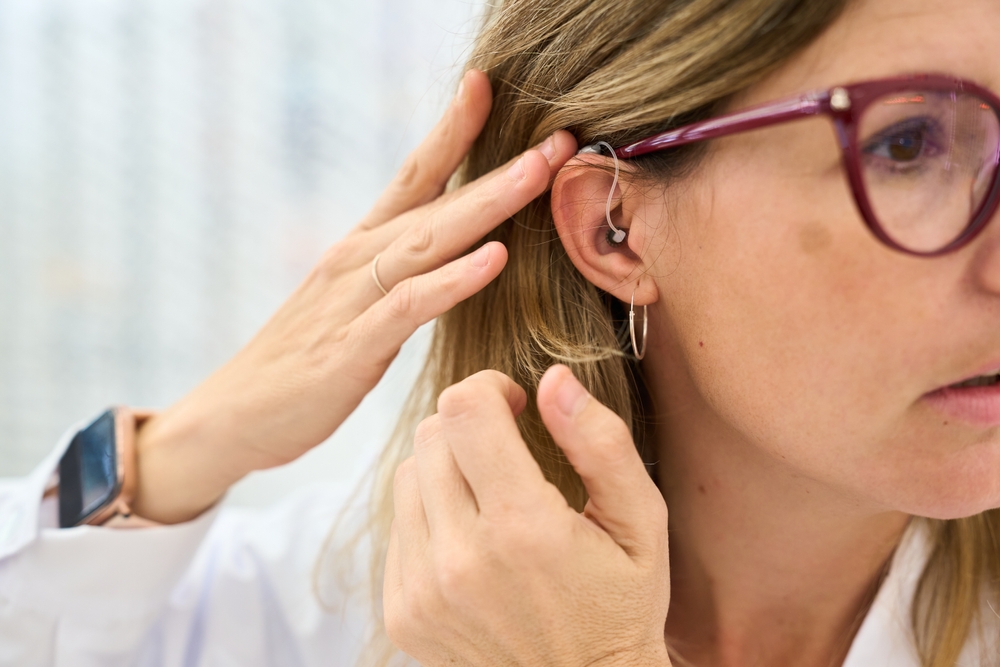
A primary reason individuals put off addressing auditory deficits is the assumption that assistive devices will be unsightly or awkward to wear. For decades, legacy acoustic amplifiers were cumbersomely large, highly conspicuous, and culturally tethered to physical senescence. Regrettably, some people even experienced social alienation because acquaintances falsely assumed that wearing a visible aid signaled a complete inability to comprehend spoken dialogue.
This obsolete perception remains deeply embedded in the public consciousness, creating a massive barrier to proactive treatment. However, contemporary medical engineering has ensured that current hearing solutions look and function in a completely unexpected manner. Ongoing innovations in cosmetic engineering mean today’s options are ultra-small, seamlessly comfortable, and beautifully hidden from public view.
If you’ve been putting off treatment because of how hearing aids used to look, it might be time to take a fresh look at what’s available today!
Dispelling the Myth: Modern Devices Have Transcended Older Styles
When most individuals conjure an image of assistive listening technology, they envision a massive beige plastic chassis hooked over the pinna and obvious to everyone nearby. If that description matches your mental model, your perceptions are anchored in the primitive analog technology of the late twentieth century.
Since then, the entire category has evolved. Unprecedented breakthroughs in microchip architecture, material sciences, and digital signal processing have utterly revolutionized modern aesthetics. Current product lines are incredibly compact, architecturally clean, and purpose-built to harmonize with your features or sit entirely out of sight.
Numerous modern instruments are inserted completely within the ear canal structure, rendering them undetectable throughout standard daily dialogue. Different configurations sit comfortably behind the ear but feature such a low profile and featherweight build that observers naturally miss them.
Primary Hearing Aid Styles, From Invisible to Barely There
For those investigating what these advanced acoustic tools look like in real life, consider this straightforward guide:
Invisible-in-canal (IIC)
This tier represents the absolute pinnacle of cosmetic concealment. Engineered to rest deep inside the ear canal, IIC systems are individually molded to match the precise contours of your ear. When engaging with others at standard social distances, these units are utterly unnoticeable to the naked eye. They represent an ideal intervention path for mild-to-moderate hearing impairments when user stealth is the top priority.
Modern Standards: Receiver-in-Canal (RIC) / Receiver-in-the-Ear (RITE)
Statistically, this open-fit design represents the dominant choice among current consumers. A tiny component sits behind the ear, connected by a nearly invisible wire to a small speaker in the ear canal. From an aesthetic standpoint, they look very similar to trendy consumer tech or modern bluetooth monitors. Unless an individual is specifically searching for the device, it remains completely unnoticed during normal interactions.
Power and Performance: Behind-the-Ear (BTE)
These units reside entirely behind the external ear, providing a slightly larger chassis that is still infinitely more elegant than historical variations. Frequently utilized to remediate severe-to-profound auditory loss, they maximize gain and processing capability while maintaining a highly professional, low-profile aesthetic.
Ultimately, contemporary hearing aids are built to empower your daily routine rather than broadcast a medical condition to the world.
How Current Hearing Technology Outperforms Traditional Amplifiers
The evolution of these medical devices encompasses much more than a superficial face-lift. Today, they function more like smart devices than traditional medical equipment. A vast majority feature native Bluetooth connectivity, enabling seamless, wireless streaming of telephonic communication, media, and television audio directly into your auditory pathway.
Managed via intuitive phone interfaces, these systems give you the power to mix sound levels or change situational profiles without ever touching your ears. Say you’re walking into a noisy restaurant: You can fine-tune your hearing to match the environment in seconds. Furthermore, lithium-ion rechargeable cells have entirely eliminated the need to fiddle with microscopic, short-lived zinc-air batteries. The process is as simple as placing the units into their charging dock each night, identical to charging your cell phone.
Overcoming the Psychological Barriers to Better Hearing
Despite being aware of these massive design improvements, it is entirely normal to feel a sense of hesitation. Acknowledging a sensory deficit and investigating rehabilitation options often forces a difficult confrontation with our own vulnerability and bodily changes. This realization can occasionally induce feelings of helplessness, leaving patients feeling detached from their own physical autonomy.
However, an alternative, empowering framework exists: utilizing hearing technology is never an indicator of structural failure. They are merely an intelligent adaptation to a universal milestone of aging that impacts us all eventually. Choosing to hear better is absolute evidence that you are choosing to optimize your body and enhance your overall quality of life.
Consider the profound joy of wearing a tiny, unnoticeable device that lets you confidently command group discussions, master noisy environments, and immerse yourself in what matters most. Talk about empowering!
Schedule Your Personal Demonstration of Today’s Top Styles
To dismantle old assumptions, the best strategy is to witness these design breakthroughs with your own eyes. We invite you to come in, ask questions, and explore your options with no pressure and no commitment necessary. View this consultation simply as a tactile opportunity to discover just how radically changed this technology has truly become.
Almost every visitor walks out completely shocked by how weightless, ergonomic, and cosmetically invisible these tools are in practice! Call our office to schedule your visit online today.