Even though cotton swabs seem practical for routine hygiene, probing the inner canal creates deeper impactions and threatens long-term ear health. Our clinic establishes whether cerumen requires physical removal and identifies the safest protocols for your individual ear anatomy. Ears don’t always need manual cleaning; however, if wax builds up, we can help patients safely remove excess wax.
What Makes Q-Tips Harmful to Ear Health?
In audiology, earwax (cerumen) is recognized as a vital protective substance rather than dirt. It functions to intercept foreign debris, suppress bacterial activity, lubricate internal tissues, and guard vulnerable ear canal skin. Rhythmic jaw motion and outward dermal migration move drying wax toward the external orifice, where it effortlessly washes away.
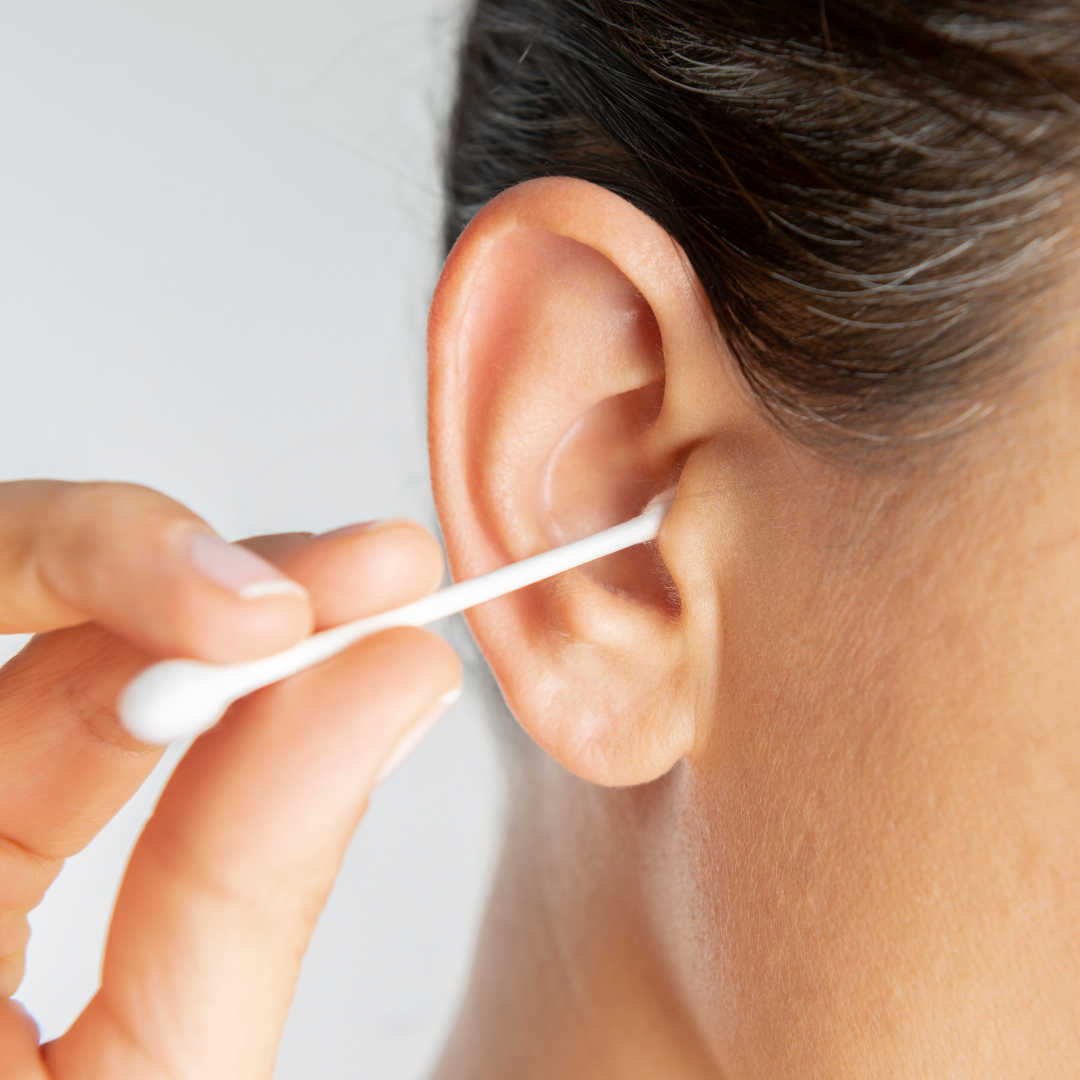
Placing a cotton applicator inside the canal completely interrupts this automated self-clearing cycle. Although the cotton may collect a small amount of wax, it often pushes the remaining material closer to the eardrum. Chronic swab insertion frequently compresses cerumen into a dense impaction, triggering a sensation of aural fullness that invites improper cleaning cycles.
Cotton swabs may be used around the folds of the outer ear, but they should not enter the canal.
Clinical Complications Associated with Q-Tip Insertion
The skin lining the ear canal is thin and easily scratched. Minor scratches can trigger localized pain, bleeding, and bacterial infiltration, substantially elevating the risk of otitis externa. Additionally, the swab tip can shear off and lodge itself securely inside the ear canal.
Possible injuries include:
- Cerumen driven into deep obstructive impactions
- Skin abrasions, tissue swelling, severe irritation, and active bleeding
- Pathogenic infection involving the ear canal
- Retained cotton tips or foreign debris inside the canal
- A torn or perforated eardrum
- Dislocation or injury of the delicate hearing ossicles
- Temporary or permanent hearing changes
- Onset of tinnitus, positional dizziness, or acute ear pain
Even though major trauma is uncommon, someone bumping your arm, a sudden hand slip, or deep over-insertion can cause severe damage.
Clinical Guidelines on Earwax Removal Frequency
For the average individual, scheduled cerumen removal is completely unnecessary. Physiologically stable ears continuously migrate wax outward, while standard showering takes care of the visible ear. Excessive cleaning strips natural oils, inflames delicate canal skin, and substantially elevates the chance of infection or impaction.
Intervention becomes necessary whenever wax creates an anatomical blockage, obstructs otoscopic examination, disrupts hearing aid operation, or causes aural distress.
Safe Protocols for Managing Cerumen at Home
If your earwax produces no noticeable complaints, leaving it alone is typically the safest protocol. Simply cleanse the external ear using a damp, gentle washcloth, allowing the internal canal to clear independently.
Should cerumen require breakdown, our team may recommend commercial cerumen-removal drops or formulas featuring saline, mineral oil, glycerin, or carbamide peroxide. Administer strictly the dosage indicated on the packaging and adhere precisely to the recommended treatment duration. Discontinue the product right away if you encounter otalgia, severe dizziness, contact dermatitis, or aggravating symptoms.
Home flushing is contraindicated in many cases and should solely be conducted after an expert confirms safety and reviews proper methods. Never use a dental water jet. Steer clear of dangerous tools such as ear candles, metal curettes, lighted camera tools, bobby pins, and home vacuum devices. These questionable products can burn sensitive tissues, lacerate the canal, rupture the eardrum, or compact wax deeper.
Indications for Scheduling a Professional Ear Cleaning
You should book a clinical appointment if your ear feels blocked following softening drops, cerumen is deeply wedged, or home methods fail to work. Direct clinical removal is particularly indicated when a patient cannot remain still, possesses tortuous or narrow canals, uses hearing aids, or has a history of ear surgery.
Seek an examination for:
- Ear pain, persistent itching, or tenderness
- Visible blood, purulent discharge, clear fluid drainage, or offensive ear odors
- Fever or swelling around the ear
- New acoustic tinnitus sounds or unstable balance sensations
- Hearing loss that starts abruptly or fails to resolve following wax removal
- Concern regarding a perforated eardrum or foreign cotton debris
- Recurrent impaction that affects hearing devices
Treat sudden hearing loss in one ear as a medical emergency rather than assuming it’s wax. Rapid audiological testing differentiates simple cerumen obstruction from serious, time-sensitive inner ear disorders.
Professional Techniques for Cerumen Removal
We initiate the appointment by visualizing the canal through a diagnostic otoscope or microscope to verify wax presence and check for signs of infection, laceration, or eardrum tears. Choosing the safest clinical protocol relies on cerumen firmness, individual canal anatomy, medical records, otologic surgical history, and patient tolerance.
In-office clinical procedures include:
- In-office or pre-visit cerumen-softening drop applications
- Regulated mechanical irrigation with body-temperature saline for sealed eardrums
- Precision micro-suction under continuous microscopic visualization
- Manual instrument clearance utilizing dedicated ear loops, fine curettes, or small forceps
Direct visualization allows the clinician to work around sensitive canal skin and stop if discomfort occurs. Combining multiple extraction techniques is sometimes required for stubborn, dehydrated, or densely consolidated cerumen. After clearance, we conduct a follow-up visualization to ensure the canal walls and tympanic membrane show no complications. If fullness, tinnitus, dizziness, or hearing difficulty continues, additional testing can identify another cause.
Schedule Professional Earwax Removal
Should your ears feel congested or your hearing performance decline, arrange an evaluation with our audiology clinic instead of reaching for swabs. Your clinical visit will cover a comprehensive review of symptoms, otologic surgical history, hearing aid utilization, home care efforts, and metabolic contributors to wax buildup. Connect with our practice today to reserve an appointment for safe, professional earwax removal.